When most people think of professional documentary filmmaking, they picture large cinema cameras, extensive lighting rigs and a crew of five. What they don't picture is a freelance videographer walking into one of the world's most prestigious museums with an iPhone, a gimbal and a light on a monopod — trying to keep a low profile while filming a genuinely extraordinary story.
That's exactly how the British Museum documentary came together. And for what I've called the most surreal shoot of my career, it worked.
The Brief
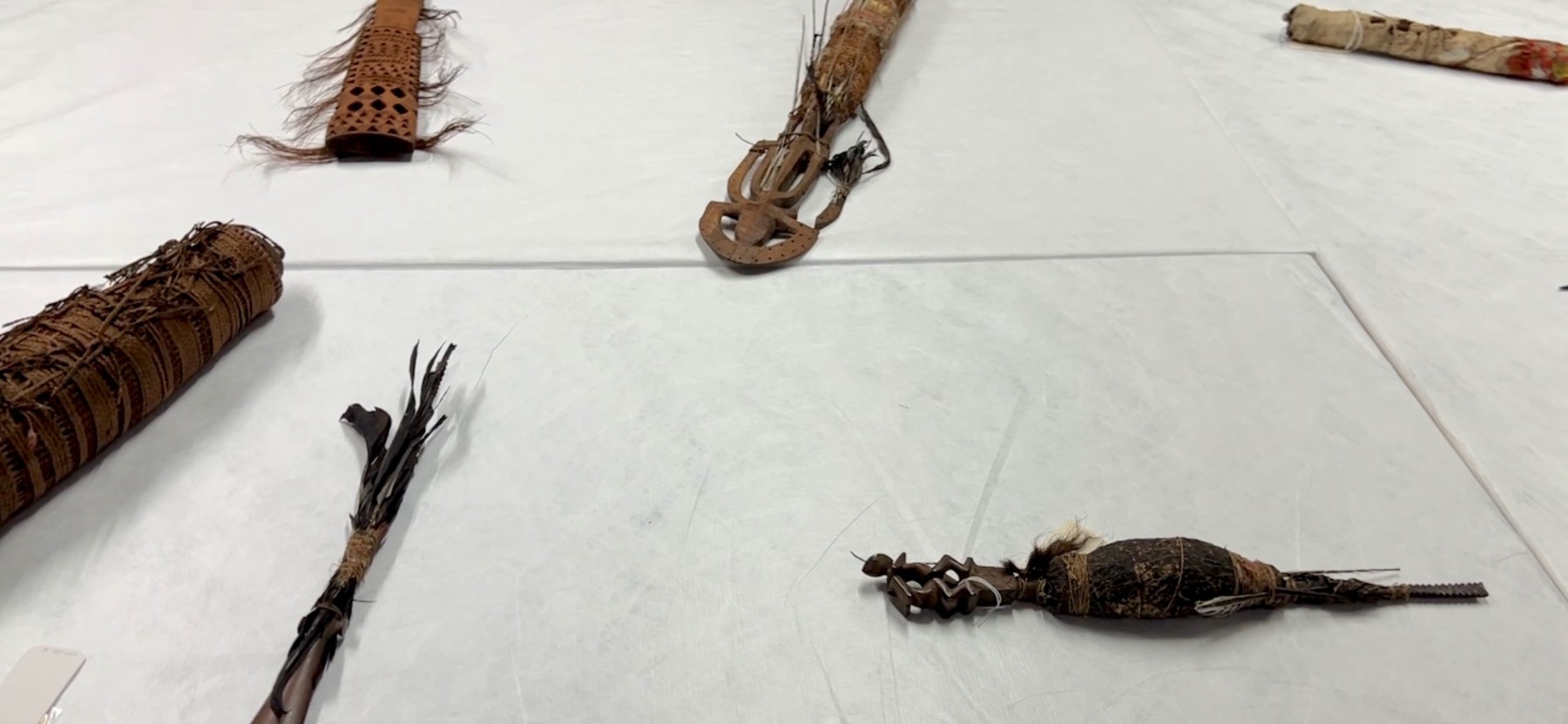
Mililani Ganivet is a Tahitian PhD researcher with privileged access to the underground reserves of the British Museum in London. Her thesis, in collaboration with the museum's Science Research Unit, involves documenting the London Missionary Society collection — thousands of sacred Polynesian artefacts, known as taoa, that have been stored in climate-controlled vaults, largely unseen by the public, for over a century.
The brief was to film Mililani's visit to the museum: her bringing the artefacts up from the vault onto a trolley, carrying them into an underground room, placing them on a table, and conducting an in-depth interview about her research, the history of the objects, and the question of whether the collection might one day be loaned back to Tahiti.
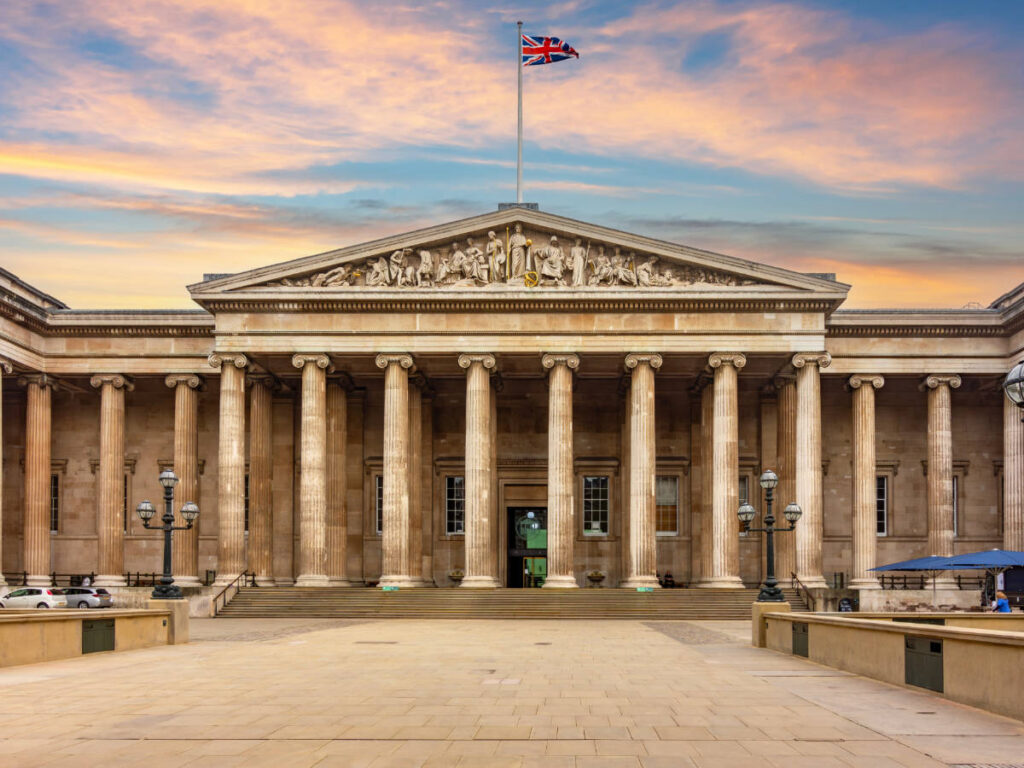
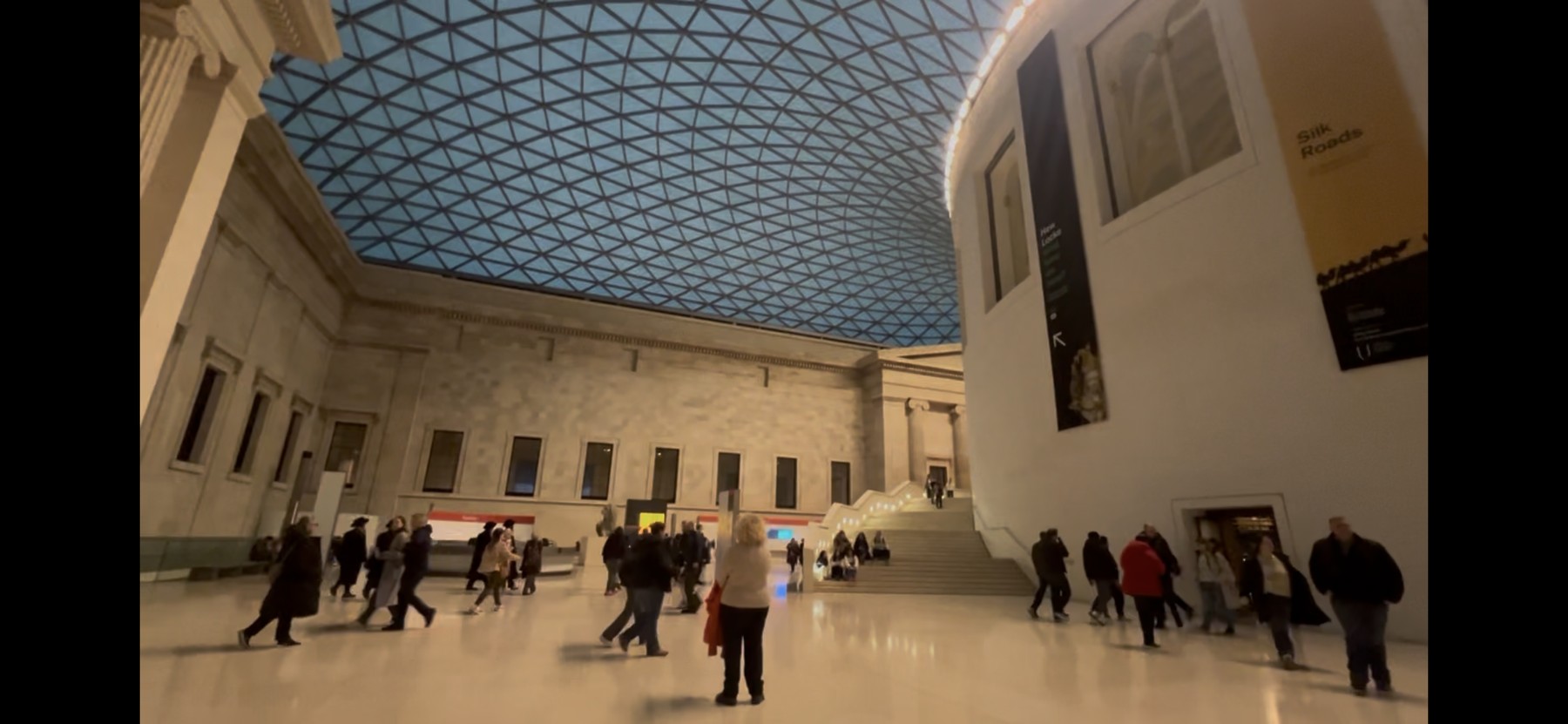
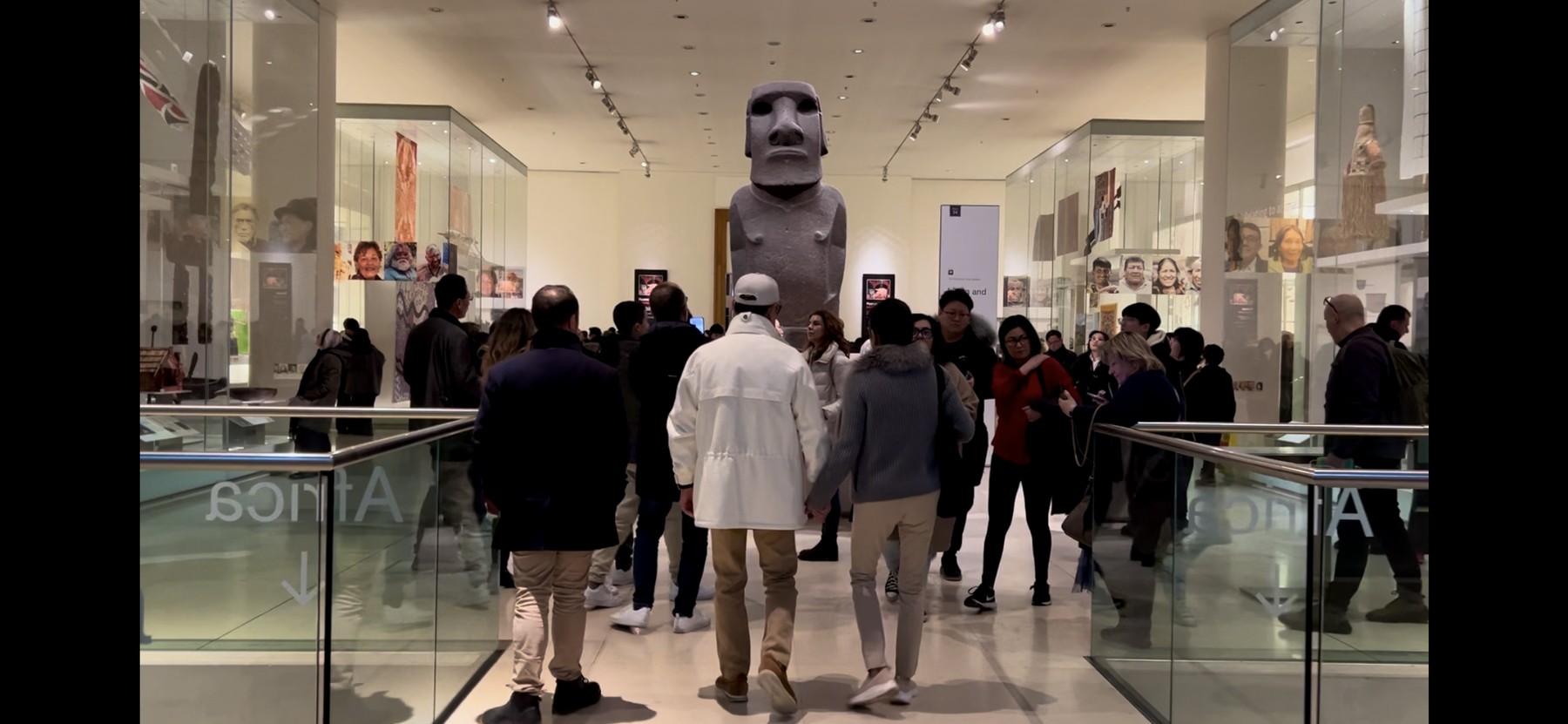
I also filmed a separate on-camera interview with a British Museum curator, and captured B-roll of the public galleries, the exterior and Mililani moving through the museum.
The Constraint — and Why It Shaped Everything
The British Museum is strict about what equipment you can bring in. A full cinema rig — cage, large battery, cinema lenses, monitor, lighting stands — was not going to happen. I needed to keep a low profile, move quickly, and work within the museum's access rules.
This was actually a creative decision as much as a practical one. Minimising the rig forces you to be more intentional. You shoot what matters. You don't overcomplicate the setup. And in a story about sacred objects that have been hidden from the world for two centuries, there's something right about not arriving with a crew of ten and a truck full of cases.
I chose to shoot everything on the iPhone 13 Pro, and I have no regrets about that decision.
The Kit — Compact, Professional, Purposeful
Just because the main camera is an iPhone doesn't mean the supporting kit is improvised. Here's exactly what I brought:
- iPhone 13 Pro in a SmallRig cage — solid foundation for attaching accessories
- iPhone gimbal — smooth handheld movement for the documentary-style following shots of Mililani moving through the museum
- Rode Micro Shotgun Mic — mounted on the cage, connected directly to the phone for clean scratch audio on all handheld shots
- DJI Wireless Microphones — on Mililani and the curator for the interview sequences
- Main tripod — for the interview setups, locked off and stable
- Aputure LED panel — mounted on the cage, providing a portable key light where needed
- LED wand light on a monopod with diffusion and barn doors — flexible positioning for fill and background separation
The whole kit packed down into two bags. I could move freely through the museum, set up quickly when we reached a location, and break down just as fast when we needed to move on.
Shooting in Filmic Pro
I shot everything using Filmic Pro on the iPhone. For professional video work on iPhone it's the standard — it gives you manual control over exposure, ISO, shutter speed, focus and white balance, flat log profiles for better colour grading in post, and the ability to shoot at specific frame rates without the phone making automatic decisions you don't want it making.
For a shoot like this — mixed light environments, varying conditions, limited time — having that manual control was essential.
Lighting in the Underground Room
The interview and artefact showcase all took place in an underground room below the museum. The room had overhead lighting, which is the first thing you check in any unfamiliar location: what is the colour temperature and how consistent is it?
I white balanced the camera to the existing overhead lights first, measured the ambient colour temperature, and then dialled my additional lights — the Aputure panel and the LED wand — to exactly match. This is critical. Mixed colour temperatures in an interview — where your key light is 5600K daylight and your overhead ambient is 3200K tungsten — will give you a shot that's impossible to colour grade cleanly. You end up with orange shadows or blue highlights regardless of what you do in DaVinci Resolve.
By matching everything to the room temperature from the start, the interview footage was clean, consistent and graded quickly in post.
"Matching your lights to the existing room temperature isn't optional — it's the difference between footage you can grade and footage you have to apologise for."
The Time Pressure
The most challenging aspect of this shoot was time. I had approximately three to four hours of actual shooting time across a full day — and most shots were single takes. There was no opportunity to reset and go again, no luxury of covering the same moment from multiple angles and choosing the best in the edit.
This is where keeping the kit minimal genuinely saved the day. A smaller setup means faster transitions between locations, less time lost on technical adjustments, and more presence in the room with your subject. The best documentary footage often comes from moments of genuine connection — Mililani examining an artefact, pausing in her explanation, reaching out to touch something carefully — and you only get those if the camera is running and you're not buried in a technical problem.
The Experience
Standing in that underground room, watching Mililani handle objects that were two centuries old — items sent to London by a Polynesian chief in 1816 as proof of his conversion to Christianity — was deeply surreal. I became acutely aware that I was witnessing the artefacts of another civilisation. Tangible pieces of time, culture and history that most people will never have the privilege to see up close.
The weight of that wasn't lost on me. These weren't museum display pieces behind glass. They were sacred objects that had travelled from Tahiti to London two hundred years ago, stored in a climate-controlled room, waiting. And here was a Tahitian researcher, thousands of miles from home, drawing them by hand and documenting them for her people.
"These weren't museum display pieces behind glass. They were sacred objects that had travelled from Tahiti to London two hundred years ago — and here was a Tahitian researcher documenting them for her people."
What I'd Do Differently
Two things. First — more time. Three to four hours is tight for a documentary shoot of this significance. Given a full day of unrestricted access, I'd have built more coverage, more B-roll of the objects themselves, more observational footage of Mililani working.
Second — the Nikon ZR. Since this shoot I've acquired the Nikon ZR, Nikon and RED's first co-developed cinema camera, and a compact rig built around it. For a restricted shoot like this — where you need genuine cinema quality in a small, low-profile package — the ZR would be the tool. Internal 6K RAW recording, RED colour science, IBIS, and a body barely larger than a consumer mirrorless. More on that camera in a separate post.
I'm also upgrading to the iPhone 18 Pro Max later this year, which will make a significant difference to future run-and-gun iPhone shoots. Another blog post will follow on that.
Final Thoughts
The British Museum documentary is proof that the equipment you're working with matters far less than how you use it, how you prepare, and how you connect with your subject. The iPhone 13 Pro, a gimbal, a couple of lights and a set of DJI wireless mics — that's what was needed for this story. And it was enough.
The best camera for a documentary is the one you can actually bring to the shoot.
If you're working on a documentary, corporate project or interview that needs professional video production — I'd love to hear about it. Get in touch via contact@niteshmistry.co.uk or WhatsApp directly.