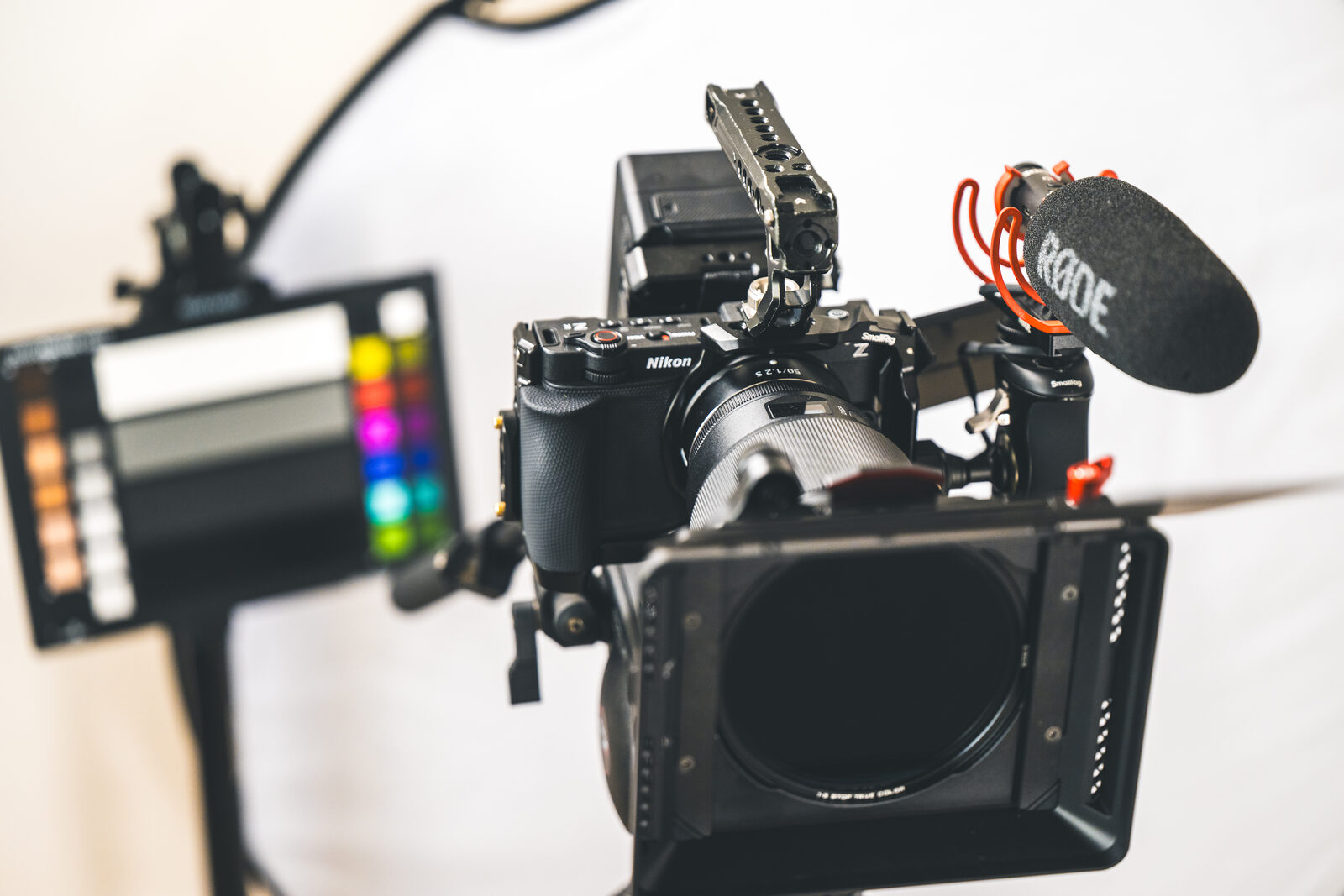
When Nikon announced in 2024 that they were acquiring RED Digital Cinema, the camera community had two reactions: excitement and scepticism. Excitement because RED's colour science and RAW recording pipeline are genuinely world-class. Scepticism because camera acquisitions and collaborative hardware don't always produce what they promise.
The Nikon ZR, released in October 2025, is what they produced. And after several months shooting with it, I'm firmly in the excitement camp.
Why I Chose the Nikon ZR
I was already invested in the Nikon Z ecosystem. Over the years I've built a set of NIKKOR Z lenses — the 50mm f/1.2 S, 14-24mm f/2.8 S and 70-200mm f/2.8 S — and they're exceptional. Moving to a new system would have meant writing off that investment and starting again.
So when Nikon released a cinema-grade body designed specifically for the Z-mount, the decision was straightforward. I wasn't switching systems — I was adding a camera that would unlock the full potential of lenses I already owned.
The other factors: the price point was significantly lower than a comparable RED camera, and the ZR brings genuine RED colour science and R3D NE recording to a body that's roughly the size of a standard mirrorless. For a freelance camera operator working across corporate events, documentary and interview work, that combination is hard to argue with.
The Body — Smaller Than You Expect
The first thing anyone says when they hold the Nikon ZR is that it's smaller than they imagined. Cinema-grade camera. Internal 6K RAW recording at 60fps. RED colour science. 4K at 120fps. And it fits in a jacket pocket without a lens attached.
There's no electronic viewfinder — which is a deliberate design decision. The ZR is built around its four-inch fully articulating touchscreen, which is large, bright (1000 nits), and covers DCI-P3 colour space. For run-and-gun work and documentary shooting where you're moving quickly between shots, it's more practical than an EVF anyway.
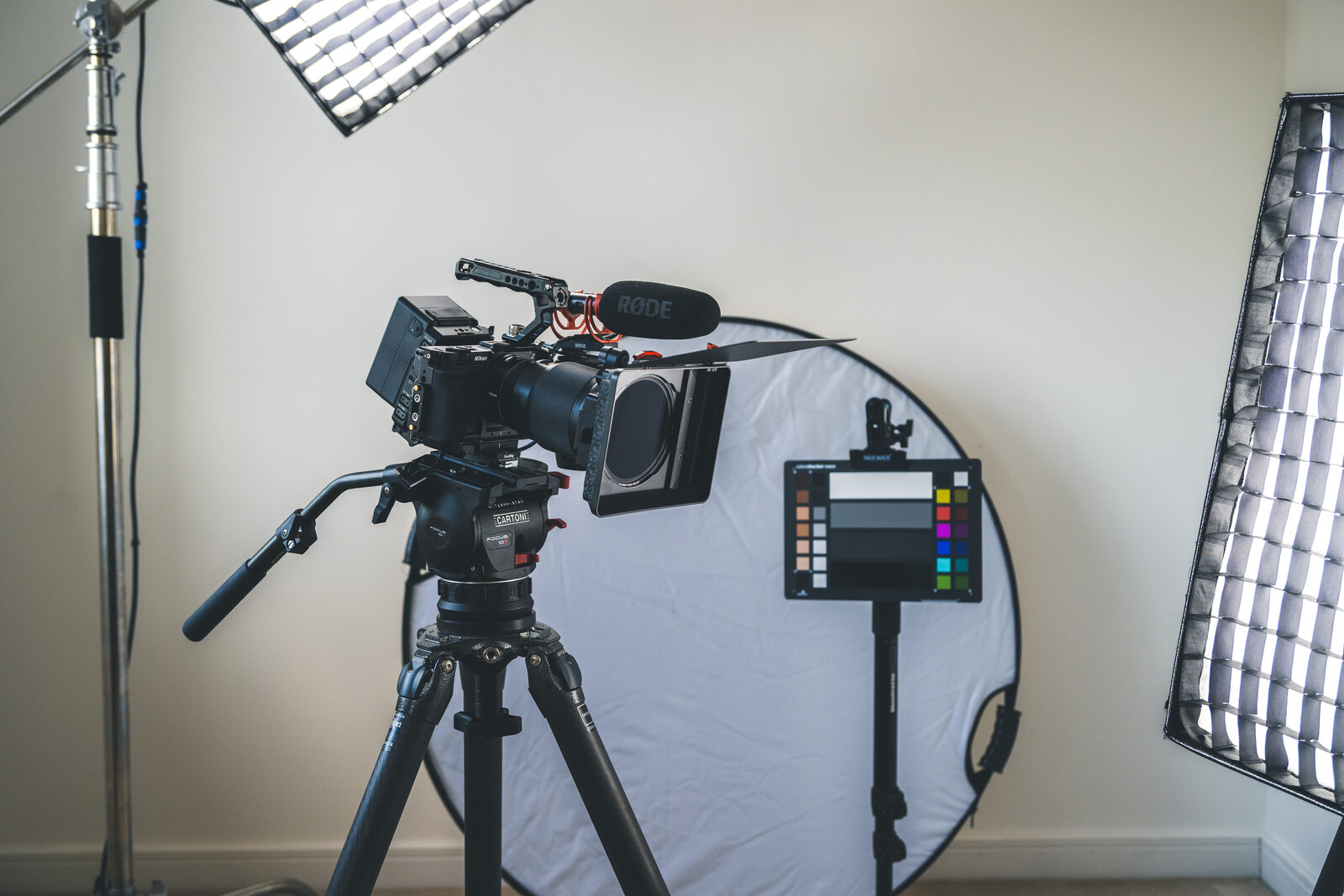
My Current Rig Setup
Straight out of the box, the ZR is a capable but relatively bare body. I've rigged it out for practical professional use:
- SmallRig "HawkLock" Quick Release Extension Cage (w/ handle) — structural foundation, attachment points for all other accessories
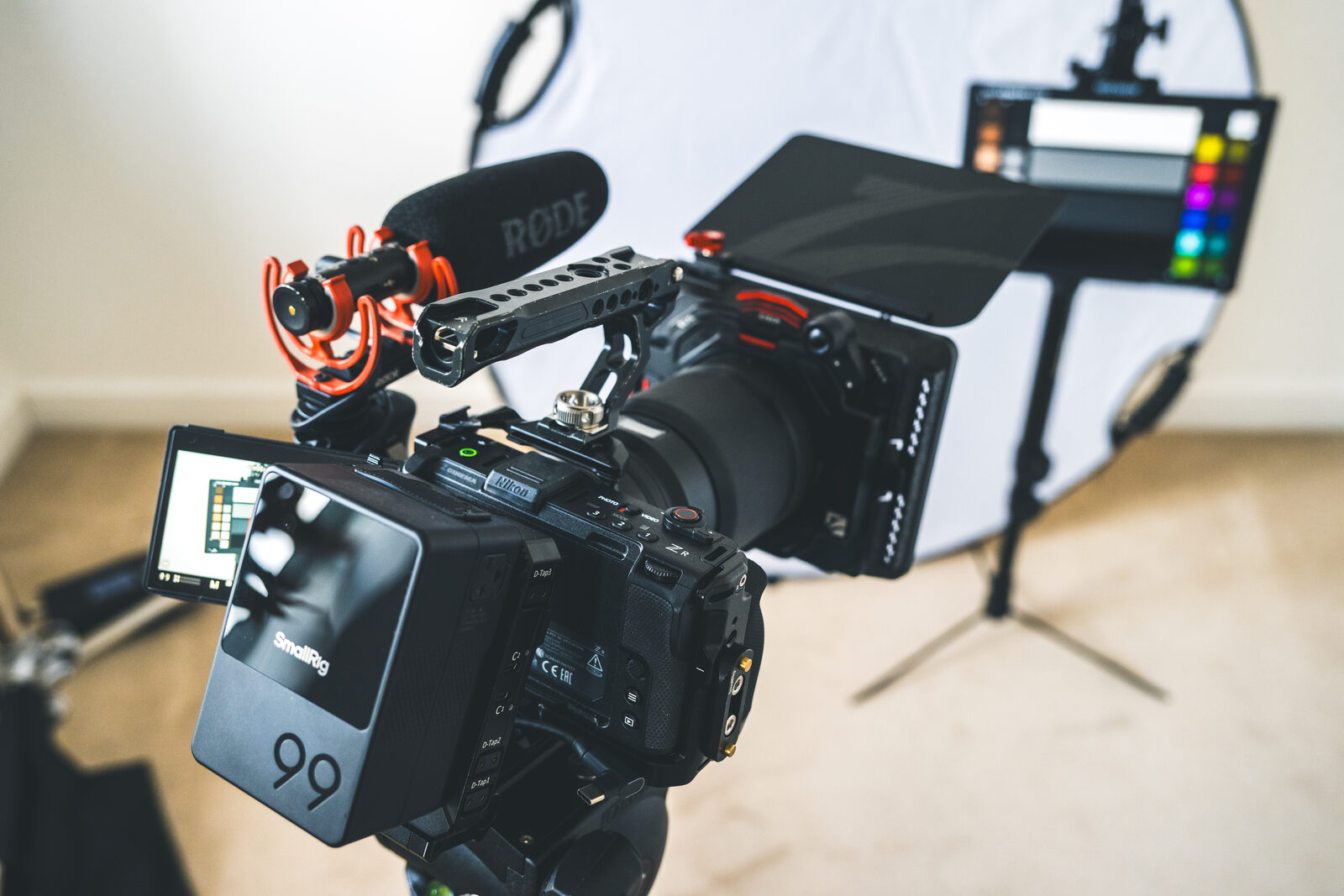
- SmallRig V-Mount Battery VB99 (99Wh/6800mAh, PD 100W) + Upgraded V-Mount Battery Plate Kit — extended runtime, essential for longer shoots and events
- SmallRig Push-Button Rotating Side Handle with NATO Clamp — ergonomic control for handheld and gimbal work
- Rode NTG external shotgun mic — clean on-camera audio for documentary and run-and-gun situations
- Freewell Eiger Pro Matte Box with Variable ND Filters — essential for managing exposure in mixed lighting, especially outdoors
The full rig is still compact enough to work from a shoulder bag. It looks like a serious camera setup without being the kind of thing that clears a room when you walk in — which matters on documentary shoots where your subject needs to feel comfortable, not filmed.
Codec Flexibility — From R3D to H.265
The ZR offers a genuinely broad codec range and I use different options depending on the type of work:
R3D NE — Flagship Format
For most of my work going forward — documentary, narrative, anything where the image quality and colour grading flexibility matters — R3D NE is the target format. Internal 6K at 60fps, RED colour science, Log3G10 and REDWideGamutRGB. The dynamic range is extraordinary — 15+ stops — and the latitude in post is the kind of thing you appreciate immediately when you're trying to recover highlights from a bright window in an interview setup.
H.265 10-bit or ProRes — Interview and Podcast Work
For interviews and podcasts where the priority is reliable, efficient workflow rather than maximum post latitude, I'll lean on H.265 10-bit or ProRes. Smaller file sizes, faster turnaround, still excellent image quality. For a three-camera podcast setup where you're outputting same-day or next-day, R3D files are overkill and a storage headache.
The Features That Surprised Me
32-bit Float Audio
Internal 32-bit float audio recording is genuinely unexpected on a camera at this price point. Thirty-two-bit float means you essentially cannot clip your audio — the dynamic range is so large that even if you set your levels wrong, the recording will contain the full information to recover in post. For documentary work where you can't always control the sound environment, this is a significant safety net.
ZineControl and Parallax Monitor
The ZR supports two dedicated iOS apps that have changed how I think about monitoring and multicam work. Parallax Monitor turns an iPhone into a full external monitor with professional scopes — waveform, histogram, vectorscope — over a wireless connection. ZineControl goes further: it lets you control other Nikon Z cameras from your iPhone, adjusting exposure, focus and recording across multiple bodies simultaneously. For multicam interview and event setups, this is a genuine workflow upgrade.
Timecode — Bluetooth and Wired
The ZR accepts both Bluetooth and wired timecode, which means it slots cleanly into professional multicam workflows. Jam it to a master timecode source and your sync is locked across every camera. For live events, conferences and anything that cuts to multiple cameras in post, this isn't a nice-to-have — it's fundamental.
Battery Life and Portability
With the V-mount battery attached, runtime is long enough for a full shooting day without anxiety. The body itself is compact enough that I'm genuinely considering it as a travel camera — not just a production tool. It shoots 24.5 megapixel stills in addition to the cinema video modes, which means one body, one set of lenses, covering both disciplines on a trip.
What's Next — Montreal
Update: that trip has now happened. I took the ZR to Montreal for solo street and documentary shooting, stripped the rig back to a lighter travel setup, and shot the whole trip in R3D NE. Full write-up here: Nikon ZR in Montreal: Solo Street Shooting.
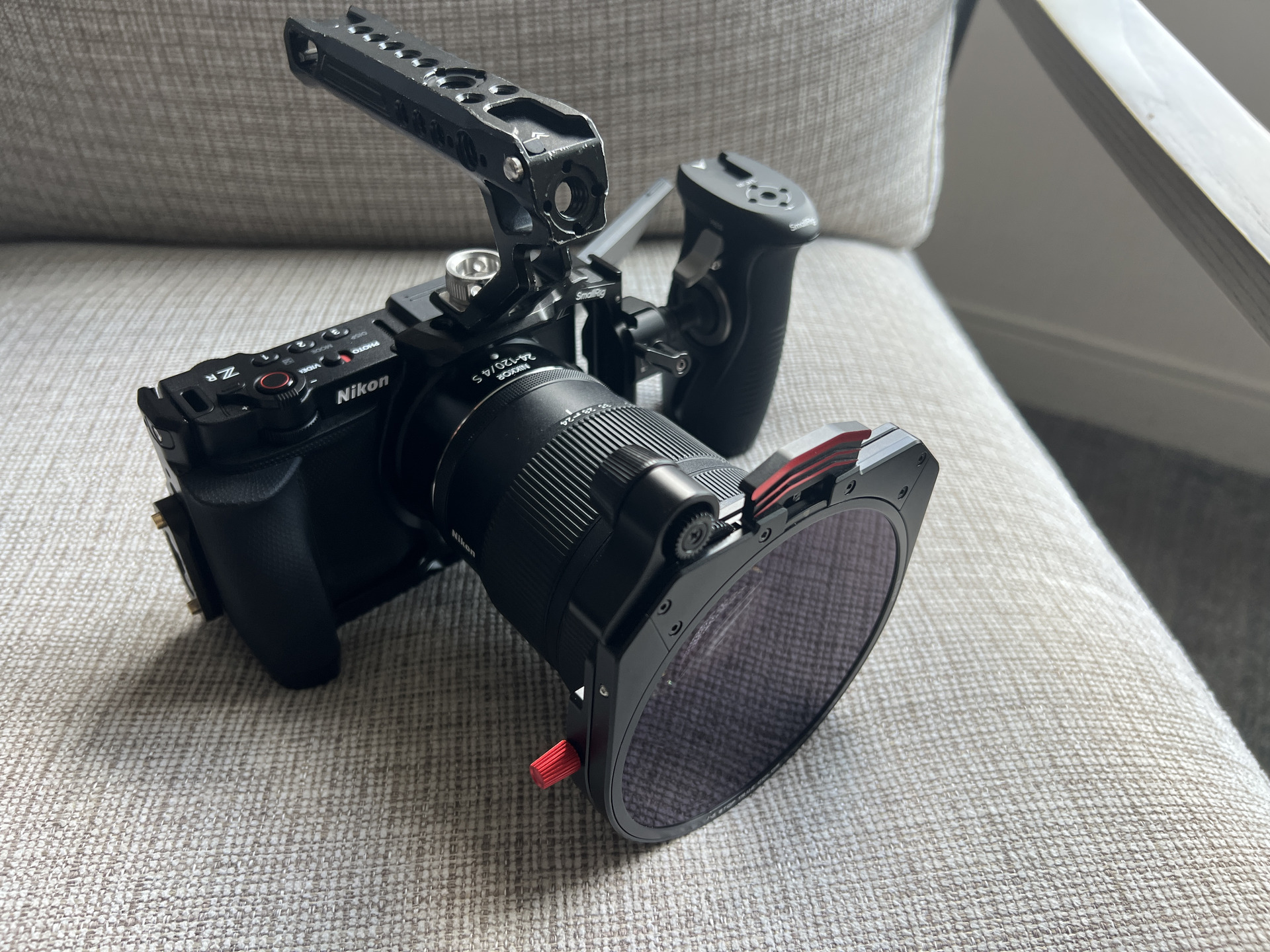
"Montreal was the real test — street shooting in unpredictable conditions, solo, with a lighter rig. That's when you find out what a camera is really made of."
Final Thoughts
The Nikon ZR is the camera I've been waiting for Nikon to build. It brings RED colour science and professional RAW recording to a body that works with lenses I already own, at a price point that makes sense for a freelance operator rather than a studio with a capital equipment budget.
It isn't perfect. The lack of EVF will frustrate some shooters. The R3D workflow adds post-production complexity compared to H.265. And rigging it out properly adds cost and weight that the bare body doesn't suggest.
But for the work I do — documentary, corporate events, interviews, multicam setups — it's the right tool. Compact enough to take anywhere. Capable enough to deliver cinema-grade results. And native to the lens system I've spent years building.
Shooting with the Nikon ZR on your next project? Or considering one for your kit? I'm happy to talk through how it performs in real-world production scenarios. Get in touch: contact@niteshmistry.co.uk.